Introduction
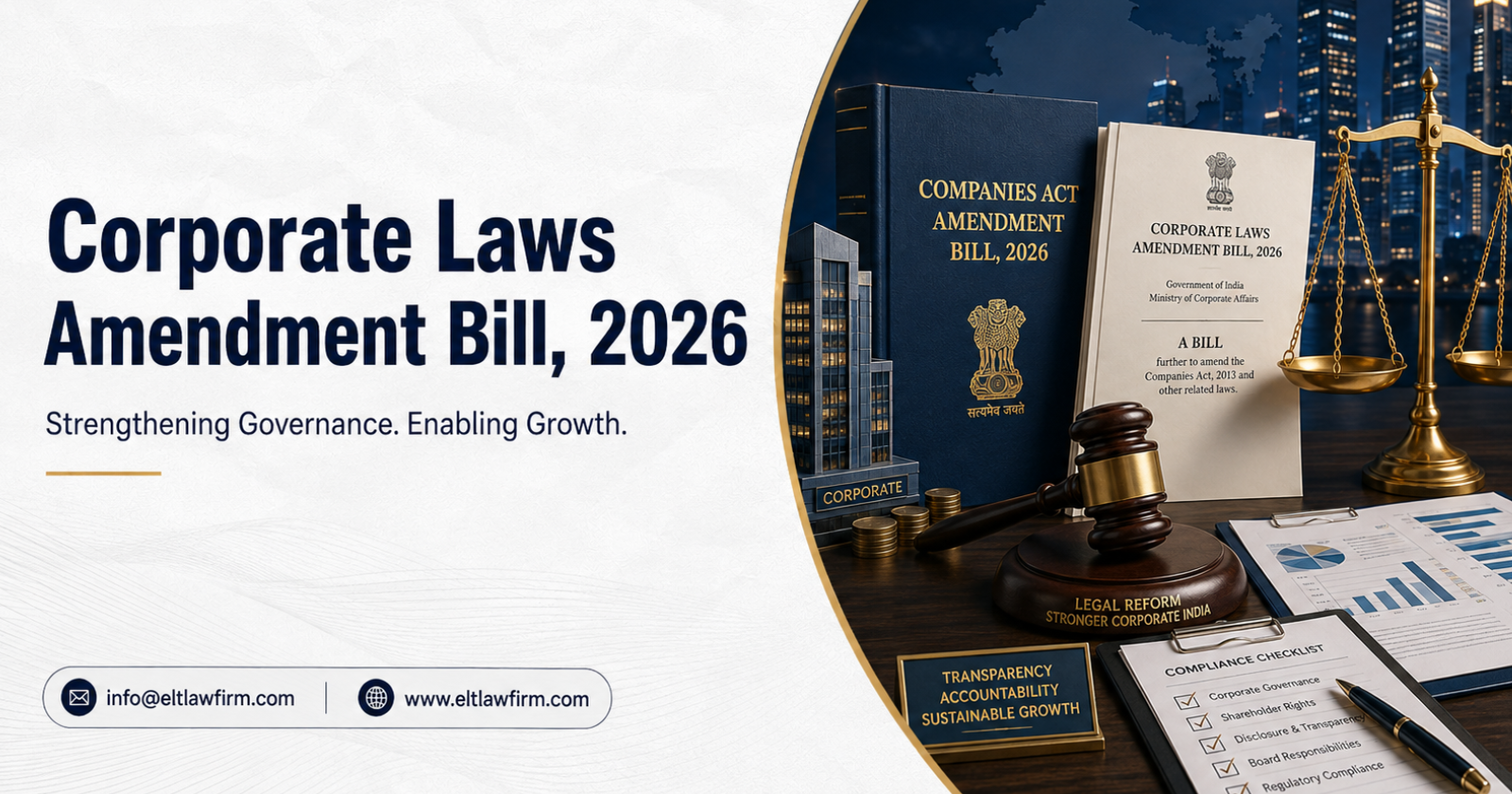
On 23 March 2026, the Corporate Laws (Amendment) Bill, 2026 was introduced in the Lok Sabha, proposing one of the most extensive updates to the Companies Act, 2013 and the Limited Liability Partnership Act, 2008 in over a decade. With more than a hundred clauses, the Bill touches almost every part of corporate life in India: how offences are punished, how small companies are defined, when CSR applies, how shareholder meetings are held, how mergers are approved, and how auditors and valuers are regulated.
The Bill has been referred to a Joint Parliamentary Committee and may change before enactment. Even so, boards, company secretaries, CFOs and investors should understand its direction now, because several changes will require updates to compliance calendars, board processes and transaction planning soon after notification. This article breaks down the key changes for directors, shareholders, ROC compliance and private companies, and ends with a practical compliance checklist.
What is the Corporate Laws (Amendment) Bill, 2026?
The Corporate Laws (Amendment) Bill, 2026 is a single legislative package that amends two central statutes together: the Companies Act, 2013 and the LLP Act, 2008. It carries forward the recommendations of the Company Law Committee Report, 2022 and the High-Level Committee on Non-Financial Regulatory Reforms, 2025.
In simple terms, the Bill does four things:
- Decriminalises minor and procedural offences by replacing imprisonment with monetary penalties imposed through electronic adjudication.
- Simplifies compliance by raising small company and CSR thresholds and rationalising filings.
- Digitises corporate functioning through virtual and hybrid general meetings, electronic service of documents and mandatory digital presence for prescribed companies.
- Strengthens accountability where public interest is highest, by empowering the National Financial Reporting Authority (NFRA), designating a single Valuation Authority and tightening auditor independence and board disclosures.
Legal Framework: Applicable Acts, Rules and Authorities
- Companies Act, 2013: Being amended across incorporation, meetings, buy-backs, charges, CSR, audit, mergers (Sections 230–233) and penalties.
- LLP Act, 2008: Amended mainly for IFSC LLPs, valuation, trust-to-LLP conversion and penalty adjudication.
- Ministry of Corporate Affairs (MCA): Administers both Acts, notifies rules and prescribed thresholds, and operates the ROC and e-adjudication system.
- ROC and Regional Directors: Registrar of Companies for filings and adjudication of penalties; Regional Directors receive statutory recognition under the Bill.
- NFRA: Restructured as a statutory body corporate with registration, investigation, direction and penalty powers over prescribed auditors.
- Insolvency and Bankruptcy Board of India (IBBI): Proposed as the single Valuation Authority for registered valuers.
- NCLT, SEBI and IFSCA: NCLT for schemes of arrangement and disputes; SEBI and IFSCA for regulated entities that get filing relief under the Bill.
Applicability: Who Needs to Pay Attention?
- Private limited and small companies: Gain the most from higher small-company thresholds, CSR relief and decriminalisation.
- Directors and KMP: Face new disclosure duties, tightened qualification norms and personal penalty exposure as officers in default, even as criminal risk for technical lapses falls.
- Shareholders and investors: Benefit from hybrid/virtual meetings, buy-back flexibility and reformed IEPF refund processes; must watch easier merger approvals more closely.
- LLPs: Affected by the extended registered valuer framework, penalty adjudication reforms and the new IFSC LLP regime with foreign-currency accounting.
- Auditors and audit firms: Come under a far stronger NFRA and a three-year post-tenure cooling-off on certain services.
- Foreign-owned Indian subsidiaries: Benefit from simpler financial year alignment with overseas parents and easier fast-track mergers.
Key Legal Requirements and Changes
1. Changes for Directors
- Decriminalisation with continued accountability: Around 21 minor and technical offences move from criminal courts to civil penalties through e-adjudication. Example: a delay in furnishing documents to the ROC would attract a monetary penalty, not prosecution. However, serious offences such as fraud remain criminal, and directors continue to be liable as “officers in default”.
- New Section 134 disclosures: The Board’s Report must explain adverse auditor observations and disclose, with reasons, any Audit Committee recommendation the Board rejected. Minutes and agenda papers must capture these deliberations.
- Stricter qualification criteria: The Bill tightens director qualification and vacation-of-office provisions, making proactive DIN and disclosure hygiene essential.
- Incorporation declarations: Professionals certifying incorporation documents (advocates, CAs, CSs, cost accountants) must give their own declarations, raising accountability at the setup stage.
2. Changes for Shareholders
- Hybrid and virtual general meetings: AGMs and EGMs may be physical, virtual or hybrid, with at least one physical AGM required every three years. Practical example: a company with NRI investors can now lawfully hold fully virtual AGMs in two out of every three years.
- Buy-back flexibility: Prescribed companies may exceed existing buy-back limits and make up to two buy-back offers in a year, with a minimum six-month gap between offers.
- Easier fast-track mergers: Fast-track mergers under Section 233 will need approval by a majority of members present and voting holding at least 75% of shares present and voting, instead of 90% of total shares; the creditor threshold also falls from 90% to 75%.
- IEPF reforms: Refund procedures under the Investor Education and Protection Fund are restructured, and unclaimed amounts from extinguished buy-back shares flow into the IEPF.
- Employee compensation schemes: Share-linked employee compensation beyond classic ESOPs (RSU and SAR-style plans) gets statutory recognition, affecting dilution and disclosure.
3. Changes for Private and Small Companies
- Higher small-company thresholds: The paid-up capital ceiling rises from INR 10 crore to INR 20 crore and turnover from INR 100 crore to INR 200 crore. Many more private companies will qualify for lighter compliance: fewer board meetings, abridged annual returns and lower penalties.
- CSR relief: The net-profit trigger for mandatory CSR rises from INR 5 crore to INR 10 crore, the CSR Committee exemption threshold rises from INR 50 lakh to INR 1 crore, and timelines for transferring unspent CSR amounts are extended.
- Financial year alignment: A simpler route to adopt a financial year other than April–March helps subsidiaries of foreign groups align reporting with their parent.
- Charge registration relief: Prescribed companies get additional time under Section 77 to register charges, protecting lender security from procedural delays.
4. Changes in ROC Compliance
- Digital presence (new Section 12A): Prescribed companies must maintain a website, official email and electronic communication channels and report these details to the ROC.
- Electronic service of documents: Specified companies may serve documents on members entirely electronically; a member may request a different mode against a fee fixed in general meeting.
- E-adjudication: Penalties for filing and disclosure defaults will be imposed through a faster electronic adjudication platform, so companies must maintain a live compliance calendar rather than relying on slow prosecution timelines.
- Periodic filings for regulated entities: SEBI- and IFSCA-regulated entities may replace multiple event-based filings with periodic filings, reducing duplication.
5. Audit, Valuation and NFRA Reforms
- Stronger NFRA: NFRA becomes a statutory body corporate with registration requirements for prescribed audit firms, powers to issue directions, investigate, penalise and make regulations.
- Auditor cooling-off: Prescribed auditors face restrictions on certain services for three years after completing their audit tenure.
- One Valuation Authority: IBBI becomes the single Valuation Authority; valuer appointments for company-law purposes must be routed through the Audit Committee by formal resolution.
Common Issues and Mistakes to Avoid
- Assuming decriminalisation means no consequences: monetary penalties will actually arrive faster through e-adjudication.
- Failing to re-test small-company and CSR status, and continuing (or discontinuing) compliance based on outdated thresholds.
- Using old Board Report templates that do not address auditor observations or rejected Audit Committee recommendations.
- Holding virtual meetings without amending Articles of Association or tracking the three-year physical AGM requirement.
- Appointing valuers through management alone instead of the Audit Committee for company-law valuations.
- Continuing advisory engagements with outgoing auditors without checking the proposed cooling-off restrictions.
- Ignoring the Bill because it is “not yet law” and losing the preparation window before phased notification.
Penalties and Legal Consequences
- Civil penalties on the company and every officer in default for filing, disclosure and procedural lapses, adjudicated electronically with limited procedural delay.
- Continued criminal liability for serious offences, including fraud, which remain outside the decriminalisation package.
- Director disqualification and vacation of office under the tightened qualification provisions.
- Regulatory action by NFRA against auditors and audit firms, including monetary penalties and debarment.
- Transaction risk: mergers, buy-backs and valuations completed without following the revised approval and valuer-appointment requirements may be challenged.
Practical Compliance Checklist
| Area | Action Point | Owner |
|---|---|---|
| Entity classification | Re-test small-company status against proposed INR 20 crore capital / INR 200 crore turnover limits; map the relaxations you would gain. | CS / CFO |
| CSR | Re-check CSR applicability against the INR 10 crore net-profit trigger and the revised committee threshold; plan unspent amounts. | CFO / Board |
| Board processes | Update Board Report templates for auditor observations and rejected Audit Committee recommendations; strengthen minutes. | CS |
| Meetings | Amend AoA and meeting SOPs for hybrid/virtual AGMs and EGMs; calendar one physical AGM every three years. | CS |
| Digital presence | Ensure a functional website, official email and e-communication channels; prepare ROC reporting of these details. | CS / IT |
| Director hygiene | Audit DIN status, disclosures of interest and disqualification triggers for all directors and KMP. | CS / Directors |
| Audit relationships | Review non-audit engagements with current and outgoing auditors against the proposed three-year cooling-off. | Audit Committee |
| Valuations | Route valuer appointments through the Audit Committee by resolution; use only registered valuers. | Audit Committee |
| Transactions | Re-assess pending mergers and buy-backs against the new 75% fast-track thresholds and buy-back flexibility. | Legal / Board |
| Compliance calendar | Move to a live filing tracker; e-adjudicated penalties will arrive faster than prosecutions ever did. | CS / Compliance |
How ELT Law Partners LLP Can Help
ELT Law Partners LLP advises Indian companies, LLPs, foreign-owned subsidiaries, boards and investors on corporate and regulatory compliance. In relation to the Corporate Laws (Amendment) Bill, 2026, our team assists with:
- Impact assessment: a clause-by-clause review of how the Bill affects your entity classification, CSR obligations, board processes and pending transactions.
- Compliance audits and documentation: updating Articles of Association, board and committee charters, Board Report formats, meeting SOPs and compliance calendars.
- Director and KMP advisory: liability reviews, disqualification checks and defence documentation.
- Transaction structuring: buy-backs, fast-track mergers, valuations and restructurings under the revised framework, including NCLT representation where required.
- Regulatory representation: ROC adjudication and appeals, NFRA-related advisory for audit stakeholders, and ongoing monitoring of the Bill through the JPC and notification stages.
Our objective is to help businesses understand their obligations early and transition smoothly once the amendments are notified, without disruption to operations or transactions.
Frequently Asked Questions (FAQs)
1. Is the Corporate Laws (Amendment) Bill, 2026 already in force?
No. It was introduced in the Lok Sabha on 23 March 2026 and is before a Joint Parliamentary Committee. It becomes law only after passage by both Houses, Presidential assent and notification of provisions, which is expected in phases.
2. Which Acts does the Bill amend?
It amends the Companies Act, 2013 and the Limited Liability Partnership Act, 2008 through a single legislative package covering governance, compliance, audit, valuation, meetings, mergers and penalties.
3. Does decriminalisation mean directors cannot be prosecuted?
No. Only specified minor and procedural offences shift to civil penalties. Serious offences such as fraud remain criminal, and directors continue to face monetary penalties as officers in default.
4. Will my private company automatically become a small company?
Only if it falls within the notified thresholds (proposed upper limits of INR 20 crore paid-up capital and INR 200 crore turnover) and is not excluded, for example as a holding or subsidiary company. The final limits will be prescribed by rules.
5. Do we still need to comply with CSR?
Yes, if your company meets the applicability triggers. The net-profit trigger is proposed to rise from INR 5 crore to INR 10 crore, so companies below that level would fall outside mandatory CSR once notified; other triggers remain unchanged.
6. Can we hold a fully virtual AGM after the Bill passes?
Yes. Virtual and hybrid AGMs and EGMs receive statutory recognition, provided the company holds at least one physical AGM every three years and follows the prescribed procedure.
7. How do the changes affect group mergers?
Fast-track mergers under Section 233 become easier: shareholder approval moves to 75% of shares present and voting (from 90% of total shares) and creditor approval drops from 90% to 75%, making intra-group restructurings significantly more workable.
8. What should audit committees do now?
Prepare to appoint registered valuers by formal resolution, review auditor independence including the proposed three-year cooling-off, and document recommendations carefully, since any Board rejection of an Audit Committee recommendation must be disclosed.
Conclusion
The Corporate Laws (Amendment) Bill, 2026 signals a clear shift in India’s corporate regulation: lighter, faster and more digital compliance for the vast majority of companies, paired with sharper oversight of auditors, valuers and financial reporting. For most private companies, the Bill brings genuine relief through higher thresholds and decriminalisation. But relief is not the same as relaxation: penalties will be imposed faster, disclosures will be scrutinised more easily, and boards that do not update their processes will feel the difference quickly. The companies that benefit most will be those that map the changes now and adapt before notification, rather than after the first penalty order.
Call to Action
Want to know exactly how the Corporate Laws (Amendment) Bill, 2026 will affect your company, board or pending transaction? Contact ELT Law Partners LLP for a tailored impact assessment and compliance roadmap. Our corporate and regulatory team helps businesses stay compliant, transaction-ready and penalty-free as the law evolves.
Disclaimer: This article is for general information only and does not constitute legal advice. The Bill discussed is pending before Parliament and provisions may change before enactment. Please consult ELT Law Partners LLP for advice on your specific situation.