
Enforcement Directorate
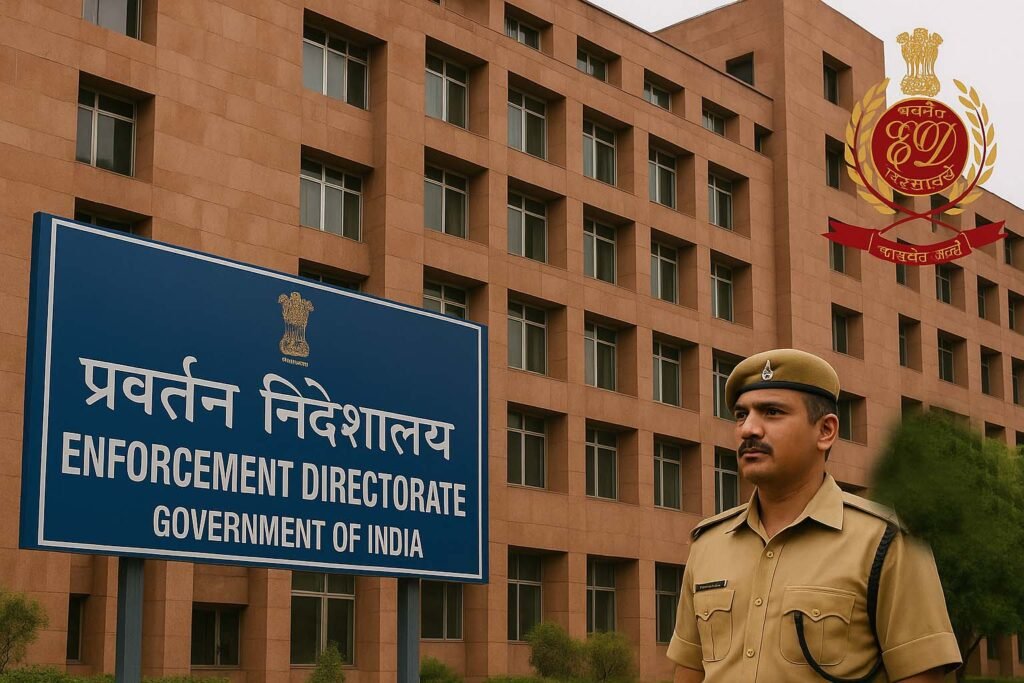
Enforcement Directorate
Enforcement Directorate (ED) Cases: Your Complete Legal Defense Guide
It starts with an official envelope—marked urgent, bearing the seal of the Enforcement Directorate (ED). Your hands might tremble as you open it. Inside, there’s a formal summons or notice asking you to appear before an investigating officer, submit documents, or explain certain financial transactions.
The first question that strikes: “Why me? What have I done wrong?”
Here’s what you need to understand immediately: receiving a notice or summons from the Enforcement Directorate doesn’t automatically mean you’re guilty of any crime. The ED is India’s premier financial investigation agency tasked with enforcing economic laws. They investigate cases involving money laundering, foreign exchange violations, and suspicious financial transactions under the Prevention of Money Laundering Act (PMLA) and Foreign Exchange Management Act (FEMA).
Many ED inquiries begin as routine investigations into business transactions, foreign remittances, cryptocurrency dealings, real estate purchases, or connections with entities under scanner. With proper legal representation and timely response, most cases can be handled effectively without unnecessary panic or damage to your reputation.
Our law firm specializes in defending individuals and businesses in Enforcement Directorate cases—from responding to initial notices to securing bail, challenging attachment orders, and fighting charges at every legal stage.
What is the Enforcement Directorate? Understanding India's Financial Investigation Agency.
The Enforcement Directorate (ED) is a specialized financial investigation agency under the Department of Revenue, Ministry of Finance, Government of India. Established in 1956, the ED is responsible for enforcing two critical economic laws:
- Prevention of Money Laundering Act, 2002 (PMLA)
The PMLA criminalizes money laundering—the process of converting illegally obtained money (“proceeds of crime”) into legitimate-looking assets. The Enforcement Directorate investigates how black money, corruption proceeds, or crime-related funds are layered, integrated, and legitimized through complex financial transactions. - Foreign Exchange Management Act, 1999 (FEMA)
FEMA regulates foreign exchange transactions and prevents illegal outflow of foreign currency. The ED investigates violations such as unauthorized forex dealings, illegal foreign investments, undeclared foreign assets, hawala transactions, and breach of RBI regulations.
What Happens When You Receive an ED Summons?
A summons issued under Section 50 of the PMLA requires your participation in an ongoing investigation. It is not an arrest order, but your statement, documents, and explanations can affect how the case progresses.
You may be asked to:
- Appear and record your statement,
- Submit account statements or other financial documents,
- Explain business transactions or investments,
- Clarify ownership of assets suspected to be “proceeds of crime.”
Responding casually or without preparation can cause trouble. A wrong explanation, missing documents, or incomplete statements may lead to more summons, property action, or even arrest. Responding properly, with legal guidance, helps protect your rights and keeps the inquiry limited to facts.
Our service includes:
Our team helps you through every stage of the ED process, from the first summons to court proceedings. We represents in:
- Examining the ECIR (internal ED case record) and checking whether a valid predicate offence exists,
- Drafting informed replies and written submissions to summons, notices of attachment, or show-cause letters,
- Arguing before the Adjudicating Authority and Appellate Tribunal to challenge attachments and seizures,
- Seeking anticipatory and regular bail before Special Courts,
- Filing applications to unfreeze bank accounts or release seized property,
- Working with auditors and financial experts to prove legitimate sources of money,
- Representing you before the Special Court (PMLA), Hon’ble High Court, and Hon’ble Supreme Court,
- Advising on compliance to prevent escalation into prosecution.
All statements and documents are prepared carefully, ensuring cooperation without compromising your legal rights.
What If You Do Not Respond?
Ignoring a summons has serious consequences. The ED may treat non-appearance as refusal to cooperate and may:
👉 Record adverse findings based on absence,
👉 Freeze bank accounts or attach property,
👉 Seek custodial interrogation or arrest,
👉 Proceed based only on other statements, without your side being heard.
If a date has been missed, it can still be regularised. We routinely assist clients in such situations by filing explanations, appearing on their behalf, and preventing unnecessary coercive steps.
When Can ED Proceedings Be Quashed?
ED (Enforcement Directorate) proceedings can be quashed by courts in specific circumstances, primarily through writ petitions under Article 226 (High Courts) or Article 32 (Supreme Court) of the Constitution. Here are the main grounds:
Key Grounds for Quashing :
Lack of jurisdiction or authority – If the ED has no legal basis to initiate proceedings against the person or in relation to the alleged offense.
Abuse of process – When proceedings are initiated with malafide intentions, for extraneous considerations, or to harass the accused rather than for legitimate investigation.
No prima facie case – If the complaint or ECIR (Enforcement Case Information Report) discloses no proceeds of crime or scheduled offense, courts may quash proceedings for being frivolous.
Violation of statutory provisions – When mandatory procedural requirements under the Prevention of Money Laundering Act (PMLA) are not followed, such as improper recording of reasons for arrest or violations of Section 50 (regarding statements).
Violation of fundamental rights – If proceedings violate constitutional rights in a manner that cannot be remedied through the normal course of trial.
No scheduled offense – Since money laundering requires a predicate offense, if the scheduled offense itself is quashed or doesn’t exist, the PMLA proceedings may also be quashed
Why Early Action Helps?
Most complications occur in the first few days due to unplanned responses. Early legal preparation allows us to:
- Verify whether the alleged predicate offence is valid,
- Prepare accurate explanations and financial disclosures,
- Object to procedural flaws or excesses at the start,
- Explore options for anticipatory bail or quashing before arrest or attachment.
Timely representation prevents escalation and protects both liberty and business interests.
Our Team Approach
A strong defence in ED matters requires both legal and financial clarity. Our approach brings together:
Professionals | Role |
Experienced Advocates | Appear before ED and courts, handle bail, quashing, and litigation |
Chartered Accountants | Prepare fund trail, ledger explanations, and financial documents |
Financial Advisors | Analyse evidence, banking patterns, and transaction flow |
By combining legal strategy with financial interpretation, we build a credible defence that stands before authorities and courts.
Your Legal Rights During ED Proceedings
Every person facing ED inquiry has the right to:
- Receive reasons for summons and know the subject of inquiry,
- Seek legal assistance while submitting documents or preparing responses,
- Challenge attachments and seizure orders before the Adjudicating Authority,
- Approach the Hon’ble High Court for quashing if the predicate offence is not valid.
The law protects you, but only if you assert those rights through proper representation.
Conclusion
An ED summons does not mean you are guilty, nor does it define your future. What matters is how you respond. A careful, lawful, and early response can prevent arrest, avoid property action, reduce unnecessary inquiry, and even end proceedings entirely.
If you or your business has received an ED notice, we help you understand the allegations, respond correctly, and protect your freedom, assets, and reputation from the start.

Frequently Asked Question
Yes, but only under Section 19 of PMLA, and only after recording written reasons to believe guilt. The person must be produced before a magistrate within 24 hours.
No, a summons is only for inquiry. It does not mean you are an accused unless formal charges are filed later.
Yes, An application can be filed before the Adjudicating Authority or Tribunal explaining that the property is not linked to proceeds of crime.
The ED case usually collapses, as there can be no laundering without proceeds of a base offence. High Courts often quash ED proceedings in such situations.
The lawyer can remain nearby and guide on rights and submissions, though the person must answer personally. Proper preparation ensures protection against misinterpretation.
Contact Us
Talk to Our Team
If you’re seeking strategic advice, strong representation, or reliable compliance support, we are here to guide you.
Location Address :
H-34/7, Sector-3, Rohini, Delhi-110085